Business Transitions
The future of your business deserves thoughtful planning. Understand your value, explore your options, and prepare for a successful transition.

Navigate Your Next Chapter with Confidence
For most business owners, their company is far more than an income source. It is a legacy. Years of hard work, sacrifice, and dedication built something worth protecting, and when the time comes to step away, the decisions you make in the months and years leading up to that transition will determine whether everything you built continues to thrive.
Thoughtful Planning Starts Early
Unfortunately, too many business owners approach these transitions without a plan, and the cost of that is measured in reduced sale price, unnecessary taxes, family conflict, and businesses that do not survive the change in leadership. At Yeo & Yeo, we work with Michigan business owners to develop a comprehensive, tax-smart strategy that protects your legacy, maximizes the value of what you have built, and positions the business for continued success.
Clarify Your Goals and Priorities
Define your personal, financial, and organizational objectives and evaluate potential paths forward based on what matters most to you and your business.
Evaluate Financial Implications
Understand the financial, operational, tax, and ownership considerations associated with different transition options to help avoid surprises and support informed planning.
Build a Transition Strategy
Create a transition plan that aligns with your timeline, goals, and succession objectives while helping prepare your business, employees, and stakeholders for the future.
Finding the Right Path Forward
Ownership changes often impact staff, customers, compensation structures, operations, tax planning, and long-term financial goals. Without proper planning, small oversights can create significant challenges later. Our team of experienced CPAs, Certified Valuation Analysts, Certified Merger & Acquisition Advisors, tax planning professionals, and business consultants helps leaders evaluate the financial, operational, and strategic considerations that support a smoother transition.

Family Business Succession
Prepare the next generation for ownership while balancing family dynamics, leadership continuity, and long-term business success.
Internal Ownership Transitions
Structure ownership transfers to key employees, management teams, or existing partners while preserving business continuity and achieving financial goals.
Business Sale Planning and M&A
Evaluate opportunities, enhance business value, prepare for due diligence, and position your business for a successful third-party sale.
Tax & Estate Planning
Coordinate transition strategies with tax and wealth transfer objectives to help preserve more of what you’ve built.
Transition Readiness & Strategy
Assess your organization’s readiness, identify potential risks, and develop a roadmap that supports a successful ownership transition.
When Does a Business Valuation Make Sense?
A professional valuation does more than determine what your business is worth. It provides clarity for succession planning, ownership transitions, tax planning opportunities, and long-term strategic decisions. Backed by specialized valuation credentials and experience serving privately held businesses across a variety of industries, our team delivers objective analyses you can trust when evaluating future opportunities and transition options.


Are you prepared for the next chapter?
Whether you’re planning years ahead or responding to an unexpected opportunity, having the right guidance can help you move forward with confidence.
Frequently Asked Questions
-
What is business transition planning and why do I need it?
Business transition planning is the process of preparing for the eventual transfer of ownership or leadership of your business — whether to family members, key employees, a third-party buyer, or through a structured vehicle like an ESOP. It encompasses business valuation, tax planning, legal structure, wealth planning, leadership development, and communication strategy. You need a transition plan because without one, a transition can be forced by unexpected events, executed under time pressure, and result in significantly less value, more taxes, and greater disruption than a well-prepared transition. Most business owners rely on their business as a primary source of retirement wealth — protecting that wealth requires planning that begins years before a transition, not months.
-
When should I start planning my business transition?
The ideal time to begin business transition planning is three to five years before your targeted exit date — and earlier is almost always better. Starting early gives you time to identify and address value gaps in your business, implement tax strategies that require time to be effective, prepare family members or key employees for new responsibilities, and negotiate from a position of strength rather than necessity. Many of the most impactful tax and estate planning strategies for business transitions require several years to execute properly. Yeo & Yeo encourages business owners to begin the planning conversation well in advance so that every available option is on the table.
-
What are the most common options for transitioning a business?
The most common business transition options include a sale to a third-party buyer (a strategic buyer, private equity firm, or individual investor), a family succession (transitioning ownership to children or other family members), a management buyout (selling to key employees or the existing management team), an Employee Stock Ownership Plan (ESOP), a merger with another business, or a planned liquidation. Each option has distinct financial, tax, and operational implications. Yeo & Yeo helps business owners evaluate all available options objectively and design a transition strategy that aligns with their financial goals, personal values, and desired timeline.
-
How does Yeo & Yeo help minimize taxes in a business transition?
Yeo & Yeo’s tax professionals work proactively to identify and implement strategies that reduce the tax impact of a business transition. Depending on your situation, this may include optimizing your business entity structure before a sale, using installment sale arrangements to spread income and manage tax brackets, leveraging qualified small business stock (Section 1202) exclusions, implementing charitable giving strategies such as charitable remainder trusts, evaluating opportunity zone investments, using family limited partnerships or other estate planning vehicles to transfer interests tax-efficiently, and timing the transaction to align with favorable tax environments. Because Yeo & Yeo’s tax and wealth management teams collaborate directly, your transition tax strategy is always integrated with your overall post-transition financial plan.
-
What is a buy-sell agreement and why is it important?
A buy-sell agreement is a legally binding contract between business co-owners that governs what happens to an ownership interest when a triggering event occurs — such as the death, disability, divorce, retirement, or voluntary departure of an owner. A well-drafted buy-sell agreement establishes a clear process for transferring ownership, a defensible methodology for determining the purchase price, and funding mechanisms (typically life insurance or installment arrangements) to ensure the transaction can actually be completed. Without a buy-sell agreement — or with one that is outdated or poorly structured — a triggering event can create serious disputes, financial hardship, and business disruption. Yeo & Yeo reviews and helps design buy-sell agreements that are current, fair, and built around a valuation methodology that will hold up when it matters most.
-
What is an ESOP and is it right for my business?
An Employee Stock Ownership Plan (ESOP) is a qualified retirement plan in which a trust purchases some or all of a business’s ownership on behalf of the company’s employees. ESOPs offer significant tax advantages for selling business owners — in some cases, owners of C corporations can defer or eliminate capital gains taxes on the sale entirely. Employees benefit from ownership stakes that grow with the business. ESOPs are best suited for profitable businesses with a stable, engaged workforce, where the owner values the legacy of keeping the business independent and rewarding employees. Yeo & Yeo provides ESOP feasibility analysis and advisory services to help business owners evaluate whether an ESOP is the right transition vehicle for their situation.
-
How does business transition planning connect to my personal financial and retirement planning?
For most business owners, the proceeds from a business transition represent the largest single financial event of their lives — and a primary source of retirement income. That makes personal financial and retirement planning an integral part of the business transition planning process. Yeo & Yeo’s integrated approach connects your business transition strategy directly to your personal wealth management plan through our Wealth Management team. We help you model post-transition income scenarios, develop a tax-smart investment strategy for transition proceeds, evaluate retirement income needs and timeline, and build a long-term financial plan that ensures the wealth created through your business continues to work for you and your family. This integration — available through Yeo & Yeo’s family of five companies — is one of the most important advantages of working with us for your business transition.
Insights & Resources

New IRS Per Diem Rates in Effect as of October 1
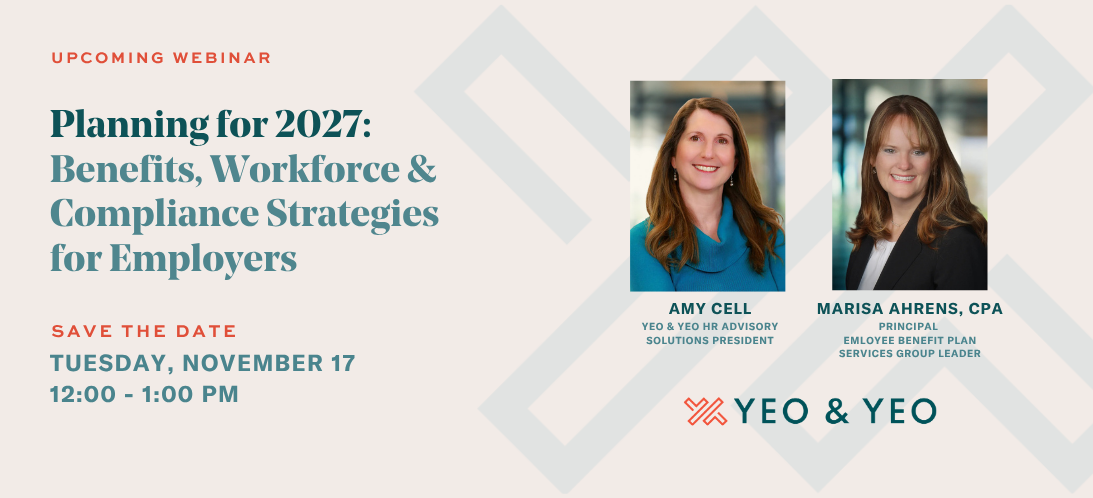
Planning for 2027: Benefits, Workforce & Compliance Strategies for Employers

Compensation, Conflicts, and Related Parties: What Your Nonprofit Needs to Know

Section 280E Still Shapes Cannabis Tax Planning: What Businesses Can and Cannot Do
Ready to Thrive?