Estates, Trusts & Gifts
Thoughtful planning today can help preserve wealth, protect your legacy, and prepare future generations for tomorrow.

A Thoughtful Approach to Wealth Transfer
For business owners, high-net-worth individuals, and families, estate planning is about more than transferring assets. It is about protecting what you’ve built, preparing for the future, and helping ensure your wishes are carried out. Effective planning requires balancing tax considerations, family goals, business interests, and long-term wealth preservation strategies.
What Are You Planning For?
Transferring Wealth to the Next Generation
Develop gifting, trust, and estate planning strategies designed to facilitate the transfer of wealth while addressing tax considerations.
Protecting a Family Business
Align estate and succession planning to help preserve business continuity and prepare for future ownership transitions.
Reducing Estate Tax Exposure
Identify opportunities to minimize estate, gift, and generation-skipping transfer tax liabilities.
Adapting to Change and Keeping Plans Current
Review existing plans to ensure trusts, gifting strategies, and estate documents continue to reflect changing laws and personal circumstances.
Coordinating Tax, Family, and Legacy Goals
Estate, trust, and gift planning often involves decisions that extend well beyond taxes. Family dynamics, business interests, charitable goals, wealth preservation, and succession considerations all play a role in developing an effective strategy. Yeo & Yeo takes a collaborative approach, working across tax, business consulting, valuation, succession planning, and wealth management to help clients address the full picture rather than a single piece of it.

Estate, Gift & Wealth Transfer Planning
Develop strategies designed to preserve assets, facilitate wealth transfer, and support family and legacy goals.
Trust Planning & Administration Support
Establish and maintain trust structures that help manage assets, facilitate wealth transfer, and address ongoing tax requirements.
Business Succession Coordination
Align estate planning and business transition strategies to help prepare future owners and support continuity.
Charitable Giving and Philanthropy Planning
Incorporate charitable goals into a broader wealth transfer strategy while evaluating potential tax advantages.
Estate & Trust Tax Compliance
Prepare fiduciary and related tax returns while helping ensure ongoing compliance with reporting obligations.
Integrate Wealth Management for a Complete Estate Planning Picture
Estate and gift tax planning and wealth management are inseparable. The investment strategy, retirement income plan, and asset allocation decisions you make today directly affect the size and composition of the estate you will ultimately transfer. Yeo & Yeo Wealth Management works hand in hand with our estate and trust tax advisors to ensure your investment strategy, retirement planning, and wealth transfer goals are fully coordinated, delivering a complete, integrated picture of your financial life that no single advisor working alone can provide.


Is your estate plan aligned with your long term goals?
Preserve wealth, prepare future generations, and support the legacy you want to leave behind.
Frequently Asked Questions
-
What estate, trust, and gift tax services does Yeo & Yeo provide?
Yeo & Yeo provides a comprehensive range of estate, trust, and gift tax planning and compliance services including estate tax planning and Federal Form 706 preparation, trust tax planning and income tax return preparation for all trust types, gift tax planning and Federal Form 709 preparation, business interest transfer planning using advanced techniques such as family limited partnerships and intentionally defective grantor trusts, charitable giving and philanthropy planning, and generation-skipping transfer tax planning and compliance. Our advisors work alongside your estate planning attorney and wealth management team to deliver a fully coordinated strategy that reflects your legacy goals and minimizes the tax burden on the wealth you transfer.
-
How does estate planning differ for business owners?
Business owners face estate planning complexity that goes well beyond what most individuals encounter — their largest and most illiquid asset is typically their business interest, which must be valued, structured, and transferred in a manner that is tax-efficient, operationally workable, and legally sound. Key estate planning considerations for business owners include the valuation of their business interest for estate and gift tax purposes, the use of valuation discounts for lack of control and lack of marketability to reduce the taxable value of transferred interests, the structure of buy-sell agreements and how they interact with estate planning, the tax implications of different business succession strategies, and the coordination of business transition planning with the broader estate plan. Yeo & Yeo’s integrated team of estate tax, business valuation, and business transition advisors works together to address all of these dimensions in a coordinated strategy that serves both your business goals and your estate planning objectives.
-
How does Yeo & Yeo coordinate with my estate planning attorney?
Estate planning is inherently a team discipline — the tax strategy and the legal documents must work together seamlessly, and the advisor and attorney must communicate clearly to ensure the plan is implemented correctly. Yeo & Yeo’s estate and trust tax advisors work closely with your estate planning attorney throughout the planning and implementation process — providing the tax analysis, financial modeling, and compliance expertise that informs the legal documents your attorney drafts. We attend planning meetings, review draft trust and legal documents from a tax perspective, prepare required gift and estate tax returns, and provide ongoing tax guidance as your plan is administered and updated over time. If you do not have an estate planning attorney, Yeo & Yeo can refer you to qualified legal professionals in our professional network.
-
When should I start estate planning?
While many individuals associate estate planning with retirement or advanced age, the reality is that meaningful estate planning should begin as soon as you have assets worth protecting, dependents who rely on you, a business interest to transfer, or a clear sense of who you want to benefit from your wealth. For business owners in particular, the most powerful transfer strategies — annual gifting programs, business interest discounting, trust structures, and lifetime exemption planning — work best when implemented years before a transition or liquidity event occurs. Yeo & Yeo encourages clients to begin the estate planning conversation well before it feels urgent, because the strategies with the greatest long-term impact are almost always the ones that require the most time to execute effectively.
-
How often should I update my estate plan?
Your estate plan should be reviewed any time a significant life event occurs — including marriage, divorce, the birth or death of a family member, a substantial change in your financial situation, a major business transaction or ownership change, a move to a different state, or a significant shift in your estate planning goals. Beyond event-driven reviews, we recommend a comprehensive estate plan review at least every three to five years to ensure your plan remains aligned with current tax law, reflects your current wishes, and accounts for changes in the value and composition of your assets.
Insights & Resources

New IRS Per Diem Rates in Effect as of October 1
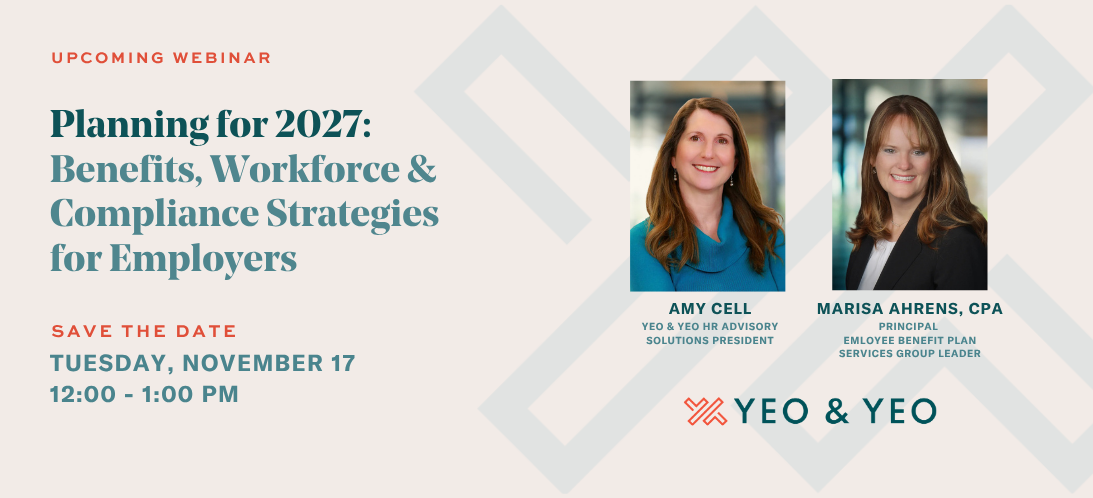
Planning for 2027: Benefits, Workforce & Compliance Strategies for Employers

Compensation, Conflicts, and Related Parties: What Your Nonprofit Needs to Know

Section 280E Still Shapes Cannabis Tax Planning: What Businesses Can and Cannot Do
Ready to Thrive?