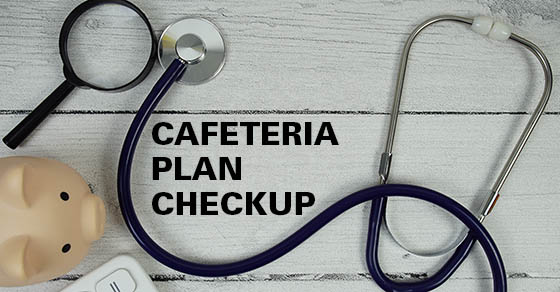
Employee benefits can quickly become outdated as tax laws change, new guidance is issued and workforce needs evolve. If your organization sponsors a cafeteria plan, regular checkups are essential to protect its tax-advantaged status and confirm that the plan continues to deliver meaningful value to your team.
Chief objective
Formally defined, a cafeteria plan is an employee benefits arrangement that meets the requirements of Section 125 of the Internal Revenue Code. Its chief objective is to give participants a choice between receiving taxable cash compensation or selecting from a menu of tax-free benefits, such as:
- Group term life insurance (up to $50,000),
- Accident and health coverage,
- Health Flexible Spending Accounts (FSAs),
- Dependent care assistance programs, and
- Adoption assistance.
Benefits are typically funded through salary reductions, though employers may also provide nonelective contributions. Essentially, participants “buy” benefits with pretax compensation dollars, reducing their taxable income, and the employer-sponsor avoids payroll taxes on those purchases.
It’s a good idea to occasionally discuss with your leadership team and professional advisors whether your plan’s design still suits your organization’s strategic objectives and workforce demographics. After all, flexibility is a major advantage of cafeteria plans.
For example, premium-only plans allocate a portion of employees’ pretax earnings to pay for accident and health insurance. Alternatively, a cafeteria plan may allow employees to make pretax contributions to FSAs or Health Savings Accounts (HSAs). FSAs allow participants to set aside dollars for qualifying medical or dependent care expenses, while HSAs may be used to pay or reimburse qualified medical expenses.
Note: To be eligible to contribute to an HSA, an employee must be covered by a qualifying high-deductible health plan and meet other IRS requirements.
4 best compliance practices
Although cafeteria plans are governed primarily by Sec. 125, many of the underlying benefits they provide — such as health coverage and health FSAs — are generally subject to the reporting, disclosure and fiduciary requirements of the Employee Retirement Income Security Act (ERISA). With this in mind, here are four best compliance practices to follow carefully and emphasize with your staff:
- Keep your plan document and, as applicable, summary plan description (SPD) updated and accessible. Sec. 125 requires a written cafeteria plan document. In addition, ERISA-covered benefits generally require an SPD and other disclosures. Participants must receive a current SPD when they first become eligible for coverage and when material changes occur.
- Guard against providing benefits to ineligible parties. Only common-law employees may participate in a cafeteria plan on a pretax basis. Partners in partnerships and more-than-2% shareholders in S corporations, for instance, are considered self-employed and therefore ineligible. Allowing them or other ineligible parties to participate can disqualify your plan.
- Conduct scheduled nondiscrimination testing. Sec. 125 requires cafeteria plans to satisfy nondiscrimination rules. That means the plan can’t discriminate in favor of highly compensated or key employees with respect to eligibility, contributions or benefits. Sponsors need to test for discrimination at least annually — and more frequently if circumstances change and create compliance risks.
Simplified nondiscrimination testing is available for small businesses (those with fewer than 100 employees) that set up “simple cafeteria plans.” These plans provide a minimum level of benefits to all eligible participants who aren’t highly compensated or key employees.
- Keep up with all administrative requirements. Beyond being subject to nondiscrimination testing, cafeteria plans must comply with various recordkeeping, notice and reporting requirements. Depending on the structure of the underlying benefits, certain plan assets may also be subject to ERISA trust requirements. It’s critical to keep up with these requirements and any new or updated federal guidance.
Be a participant pleaser
A cafeteria plan can be a powerful tool for delivering tax-efficient benefits to employees, but it demands careful oversight. Many employers make the mistake of taking a “set it and forget it” approach. Contact us for help conducting a thorough review of your plan and